

Cloud is the default. And for most CSPs, that’s the right call – at least most of the time.
Cloud deployment is faster to set up, simpler to manage, and easier to scale. You don’t need a dedicated infrastructure team, you’re not on the hook for maintenance, and there’s no months-long procurement cycle blocking implementation. For a provider launching or upgrading a softphone offer, that’s a real advantage.
So this isn’t an argument against cloud, but about the moment when cloud stops being an obvious default and becomes one option among two, and how to recognise when that moment applies to you.
The question isn’t on-premise vs cloud. It’s what you need to manage
Most comparisons of cloud and on-premise deployment frame the decision around cost and IT effort. That framing works for buyers choosing a phone system for their own business. But, it doesn’t quite fit for CSPs deciding how to deploy a product they’re offering to their customers.
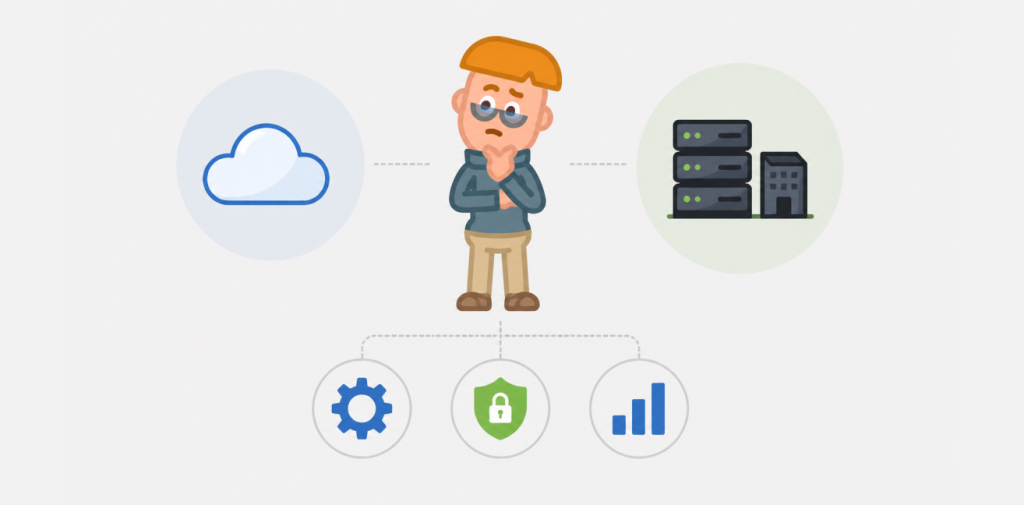
Different CSP deployment models create different operational and compliance tradeoffs. For a communication service provider, the deployment model question is really about management – and specifically who needs it, over what, and why.
That can include:
- Data location. Where is your customers’ call data actually stored, and does that location matter to them or to a regulator?
- Infrastructure ownership. Who is responsible for the platform your service runs on?
- Operational independence. If your vendor changes its pricing, its roadmap, or goes out of business – what happens to your service?
- Internal IT governance. Does your own organization, or your customers’, have policies about what runs in a third-party cloud?
- Regulatory expectations. Are there local rules or government procurement requirements that specify where software must run?
When none of these are a concern, cloud is fine. But as soon as any of them becomes a requirement, the deployment model is no longer just a technical detail — it becomes part of your service strategy.
It’s also worth considering that requirements can change over time. A deployment model that works today may not fit tomorrow, either because your own business evolves or because customer expectations, regulations, or procurement policies shift.
A CSP may start with a cloud deployment for speed and simplicity, but may need to switch to an on-premise option for enterprise or government customers in the future. Others may need to support both models simultaneously across different customer segments.
For that reason, flexibility matters over the long term, not just at launch. Choosing a provider that can support both cloud and on-premise deployments from the start can help avoid operational fragmentation if you eventually need to support both deployment models.
Who tends to care more about this?
Not every CSP is in this position, but some industry segments encounter these considerations more often than others.
Regional CSPs serving government or enterprise customers are one of the clearest examples. When you’re selling into the public sector, your customer’s internal policies often dictate their requirements. Government procurement frameworks in some countries require or strongly prefer that software runs on infrastructure the buyer controls – or at least infrastructure located within their jurisdiction.
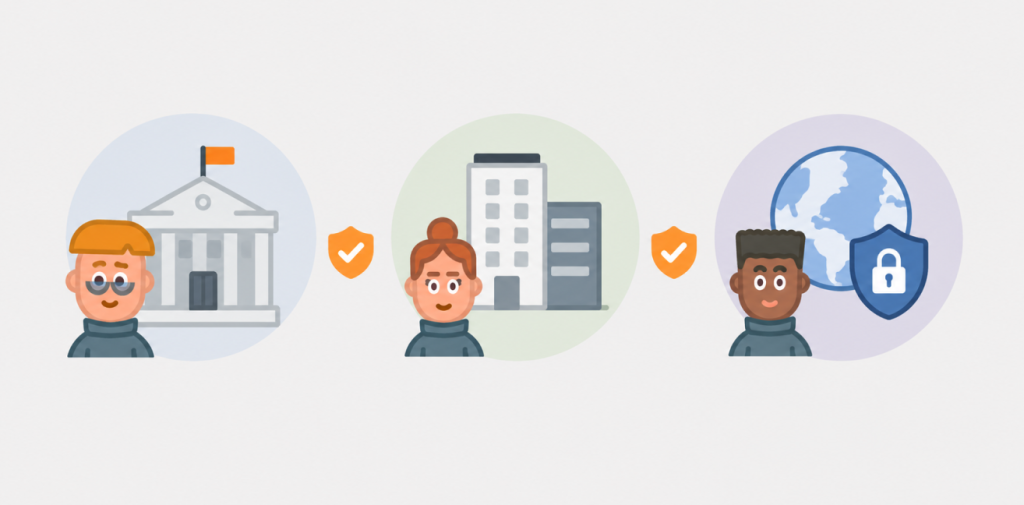
The same applies to CSPs working with enterprise customers who have their own IT security functions. An enterprise security team may simply not accept a cloud-deployed application that sits outside their control. They’re not irrational, they’re just doing their job.
Providers in markets with data localisation requirements face a more specific version of this. In some countries, regulations require that certain categories of data (e.g. communications data) stay within national borders. For a softphone product, the question of where the infrastructure sits becomes directly relevant to compliance, not just preference.
We’ve seen this a lot in markets like Serbia, where local regulations and internal policies have led CSPs to require on-premise deployments explicitly. It’s a real factor in how some procurement decisions land in certain markets.
The commercial case for on-premise goes beyond compliance
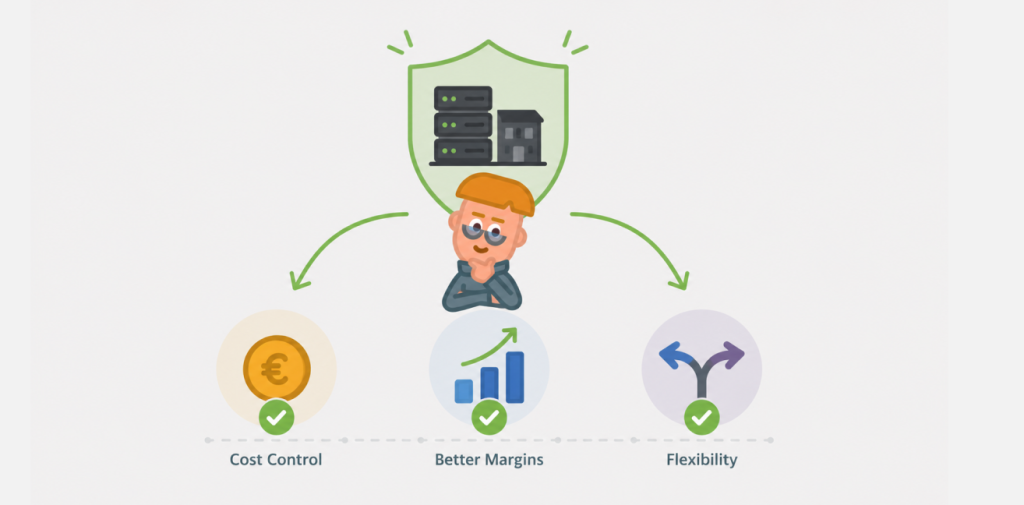
Regulatory requirements are the clearest trigger for an on-premise conversation. But they’re not the only ones. Some CSPs choose on-premise based on how they want to run their business, not from specific rules.
When you deploy a product on your own infrastructure, you’re not tied to a vendor’s pricing decisions, product roadmap, or operational choices. You can continue running it if the vendor changes direction. You’re not dependent on a third-party platform staying up, staying affordable, or staying aligned with your needs. You own the operating environment.
For providers who’ve been through a vendor transition before – a SaaS platform that changed its pricing model, deprecated a feature set, or simply disappeared – that kind of resilience isn’t abstract. It’s something they actively look for in future decisions.
This is a deliberate commercial choice, not a legacy reflex. It reflects a view that long-term control over your infrastructure is worth the additional responsibility of managing it.
Cloud still wins on speed and simplicity
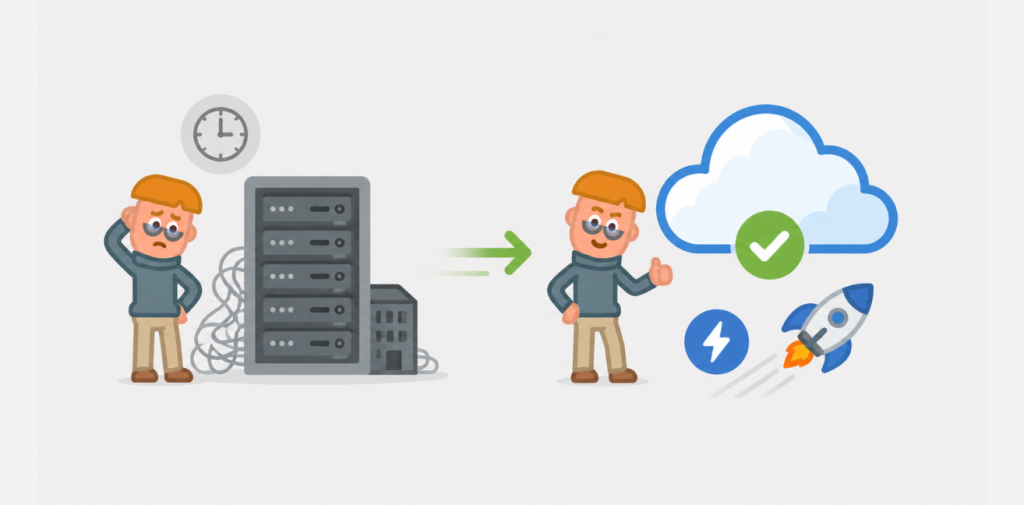
None of this changes the practical reality that cloud deployment is easier to start with.
For most CSPs evaluating PortaDialer, the cloud model makes sense. A cloud-hosted softphone is often the fastest way to launch a branded communications service without infrastructure investment, without an internal team to manage it. The entry offer consisting of a cloud-hosted infrastructure, up to 100 seats, and support for iOS, Android, and the web, is designed specifically for a fast, low-commitment starting point.
On-premise is available for providers who have specific requirements that make it the right fit. It’s not positioned as the serious or enterprise option. It’s simply the right option for some CSPs in certain markets, serving specific customer segments.
How to know when this choice is relevant to you

Most CSPs can quickly determine whether cloud or on-premise is right for them, but there are a few key signals worth considering:
- You’re pursuing government or public-sector contracts where infrastructure location is part of the evaluation criteria.
- Your enterprise customers have IT or security teams asking where the software runs.
- You operate in a market with data localization or residency rules that affect communications infrastructure.
- You have internal governance requirements around change control or third-party cloud usage.
- You’ve had a bad experience with vendor dependency before and want to build differently this time.
If any of those apply, it’s worth considering your deployment model carefully, ideally before you find yourself in mid-procurement and the options start narrowing.
A practical note on PortaDialer
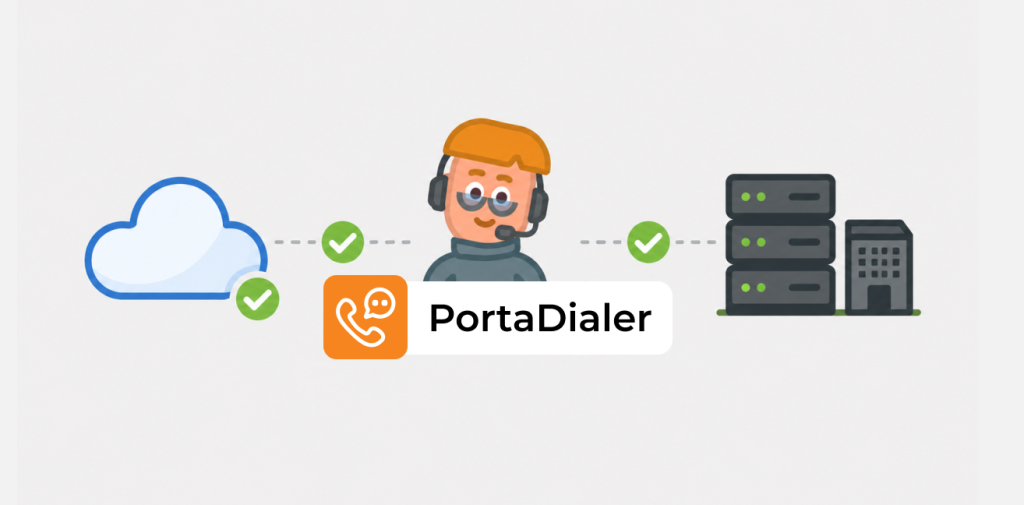
PortaDialer is a branded softphone for VoIP providers, cloud PBX operators, and CSPs. It runs on iOS, Android, and in any web browser, and works with your existing SIP infrastructure. The standard entry model is cloud-based so it’s the fastest way to launch or replace a softphone offer. On-premise deployment is also available for providers with specific infrastructure or regulatory requirements.
If you’re at the point of evaluating which model fits your situation, we’re happy to have that conversation.