
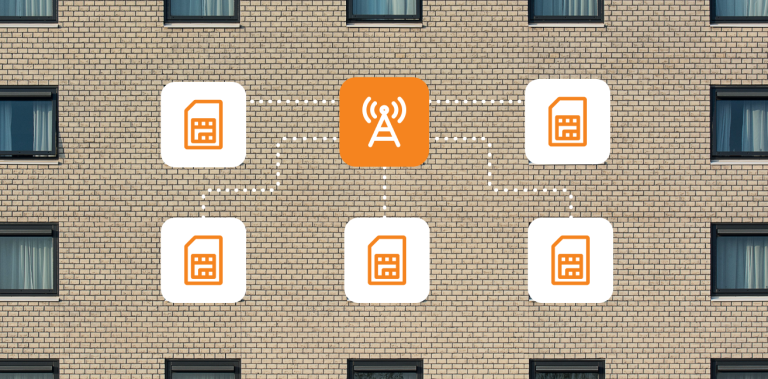
Here is a question we see often: Does an MNO actually need to become an MVNE – that enablement layer – if they want to host MVNOs?
Let’s set up our answer with a scenario. Say your sales department signs a new light MVNO partner. Now your team has to start contemplating the same issues all over again. New product catalogue. Tariffs. Charging rules. A new SIM or eSIM process. Adjusted reporting. New API access. And a new slice of your customer hierarchy to keep separate from everyone else’s.
Do that once, and it’s a project. Do it for every MVNO you sign, and it’s a whole lot more. Soon, the question of how many MVNOs you can support is being determined by your resources rather than by demand.
This isn’t hypothetical, especially in emerging markets where MVNO licensing is accelerating. Nigeria alone issued 43 new MVNO licenses in a market where three operators still control 94.6% of all connections. And all across Africa real operators are already launching MVNOs using exactly these models.
Every one of those new MVNOs needs a host network. Often, they need a host that can hand them the systems they need to run their business from day one.
You’re Probably Not Choosing Between Staying an MNO and Becoming an MVNE
Most MNOs already have what it takes to serve mobile customers. You have the network, the retail subscriber base, the core systems. In truth, becoming an MVNE isn’t really a strategic fork in the road for you.
The real opportunity sits one layer below. It’s hiding in the wholesale relationships between you and the MVNOs using your network. You are supporting several of these customers directly, through the same BSS you run your retail business on. That creates work that has nothing to do with growing your subscriber base.
This is exactly why an independent MVNE or MVNA exists in the first place. They act as a buffer layer that takes that operational load off your hands. Useful – no question. But partnering with an external MVNE also means handing part of the relationship, and part of the margin, to someone else.
Host MVNOs with one BSS/OCS Platform
Luckily, there’s an option. If you want to host MVNOs or grow your wholesale MVNO business, you don’t necessarily need the MVNE part. What you need is a dedicated multi-tenant BSS/OCS platform that can give you the enablement capabilities to onboard and manage multiple light MVNOs directly, while keeping those partners separated from your core retail BSS. That’s not the same as turning yourself into an MVNE. Rather, it’s filling the technology gap between your network and retail BSS on one side, and your hosted light MVNOs on the other.
What a Light MVNO Actually Needs from You
Your retail BSS probably isn’t built to be handed to a partner. It’s wired into your internal processes, and opening it to outside companies raises uncomfortable security and policy questions. If you designed that BSS around your own retail operation (which you likely did), it’s not a model that can support several independent businesses that each need their own products, pricing, and reporting.
Additionally, every change requested by an MVNO partner is competes with your own team’s roadmap. That’s why onboarding a new MVNO often crawls.
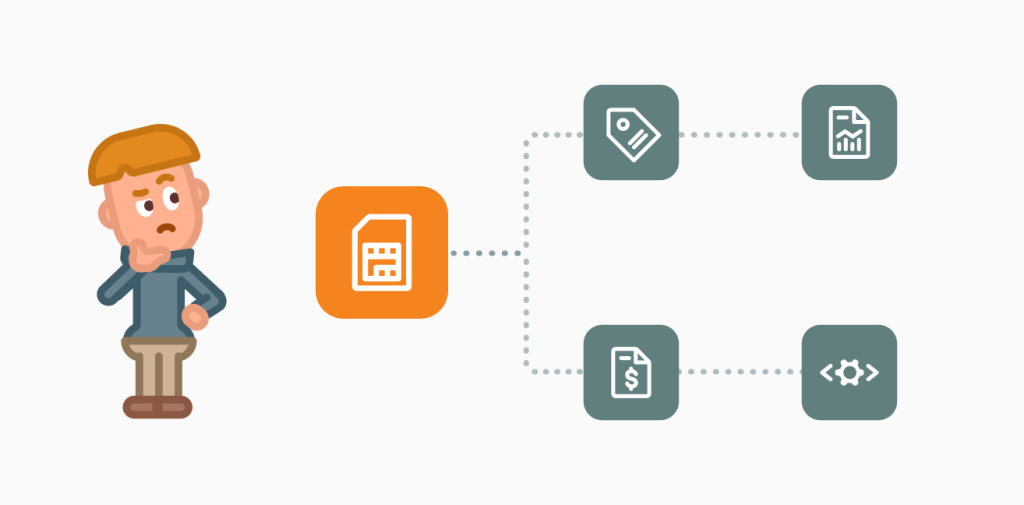
None of this means you need to turn yourself into an MVNE to host MVNOs. Instead, you need a separate enablement layer that works alongside your retail BSS and your core network.
Host MVNOs in a Way That Can Scale
With PortaBilling, that layer already exists. That’s because the platform runs separate virtual environments on a single underlying installation. That means you can have one per MVNO, each with its own product catalogue, subscribers, tariffs, and charging rules. A PortaOne-powered MVNE in South Africa is using exactly this setup to onboard a growing roster of niche MVNOs, each in its own partitioned environment. And it’s doing it without having to rebuild its platform for every new brand.
There’s one more benefit, too. PortaBilling also handles the piece that often slows down onboarding the most: the real-time charging and policy control. Each hosted MVNO can run its own prepaid rating, data bundles, and zero-rating rules without touching anyone else’s. This is the kind of online charging and policy control that African MVNO operators already rely on to launch differentiated products fast. Light MVNOs that don’t have their own BSS or OCS can be hosted this way from day one. Meanwhile, any MVNOs that outgrow a shared environment can move to one of their own.
Want to Host MVNOs? Here’s an Enabler Test
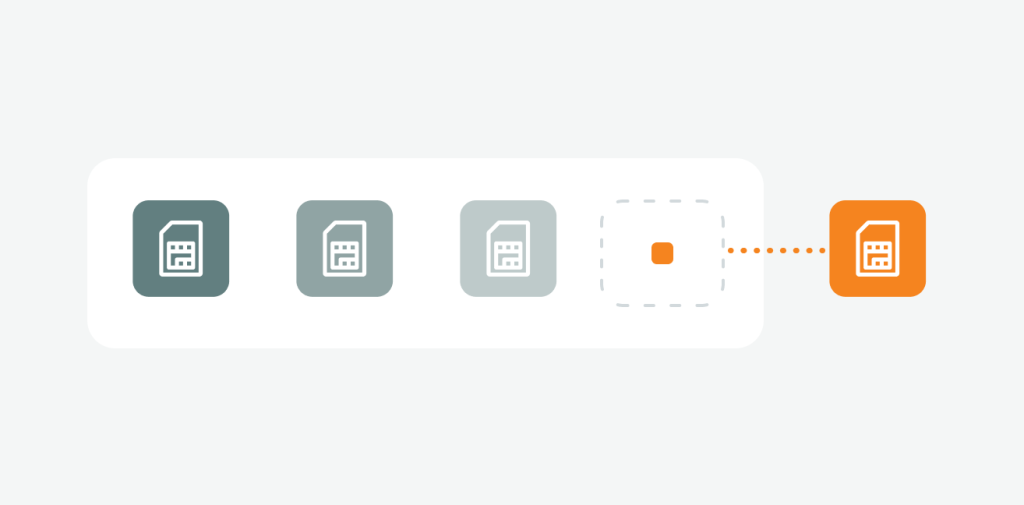
So, does a system that can run several MVNOs automatically become an enablement platform? In short, no. The real test is simple: can your next MVNO be added without rebuilding the environment?
A platform built around one brand, one catalogue, and one set of hard-coded processes is still a single-tenant platform, however capable the underlying technology is. For the next MVNO to slot in cleanly, it needs its own:
- Products and prices
- Subscribers and balances
- Invoices and reporting
- Users and permissions
- Customer-facing identity
On top of that, the platform needs wholesale billing between you and each MVNO, clear operational boundaries between partners, and a repeatable process for bringing the next MVNO on board. What it doesn’t need is to become a whole new project every time.
Get that separation right once, and the principle that follows is clear: build for one, launch for many.
Datora: The MVNO Enablement Model at Scale
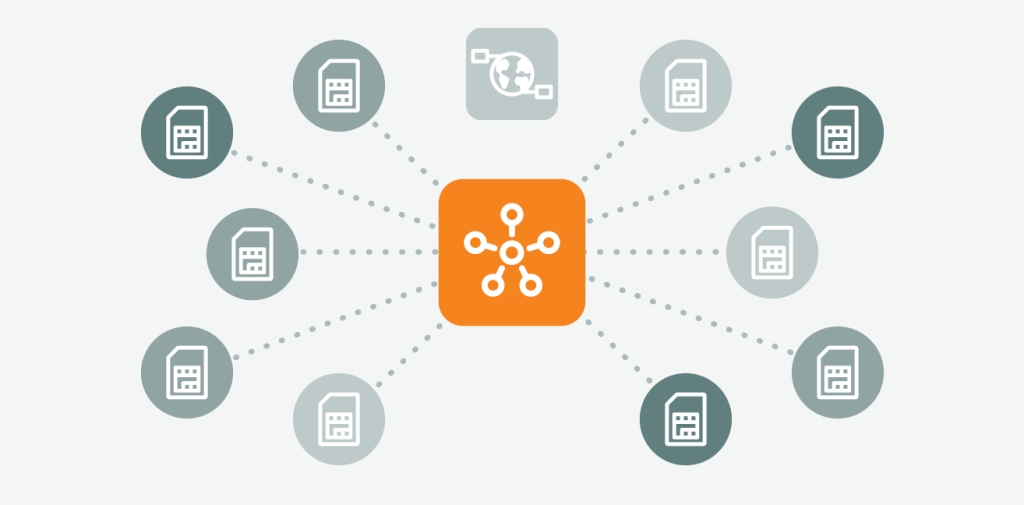
Datora Group, a Brazil-based wholesale telephony provider, is a working example of what this looks like at scale. The company has been running on PortaBilling since 2007, moved its billing to the cloud in 2018, and today sells carrier services to around 2,000 providers across nine countries. Arqia, its mobile unit, runs M2M and IoT connectivity on the same platform. At the point of the company’s recent acquisition, they were running roughly 4 million active SIM cards, built for use cases like smart farming and livestock monitoring (read the case study).
We’re not saying that every MNO needs to copy Datora’s exact model. But they are proof that the enablement model – one platform, separated per partner, reused for the next one – works. Namely, this is a real, multi-brand wholesale business, not just a product capability on a slide.
What This Is Worth to You, in Practice
So who does this matter to? Any MNO that is uncomfortable with the resources it takes to scale their wholesale MVNO business. With this model you can:
- Say yes to more MVNO deals, because they are not adding a proportional amount of operational work. New partners fit into a platform you already run, instead of you needing to create a bespoke build.
- Host light MVNOs that don’t have their own BSS or OCS. These are the ones that would otherwise need an external MVNE just to get started.
- Help new partners launch faster and cheaper. The product catalogue, charging, and provisioning pieces already exist – you’re not rebuilding them for each deal.
- Keep control. You set the access, configuration, charging rules, and commercial limits for every hosted MVNO. You don’t have to cede that power to a third party sitting between you and your partner.
- Hold onto MVNO partners longer. Because why would they move? You’re not just wholesale network access they could get anywhere. You’re providing the operational backbone they need.
- Capture revenue that might otherwise go to an external MVNE. Meanwhile, you’re keeping that direct relationship with the MVNO.
- Create a whole new line of revenue. Charge your MVNO partners for their hosted environment directly, or fold it into your wholesale commercial terms.
In short? You can become a more attractive wholesale partner to the brands, enterprises, retailers, fintechs, and ISPs that want to launch a mobile offer without having to build a telecom stack of their own.
Host MVNOs with a Core That Stays Yours
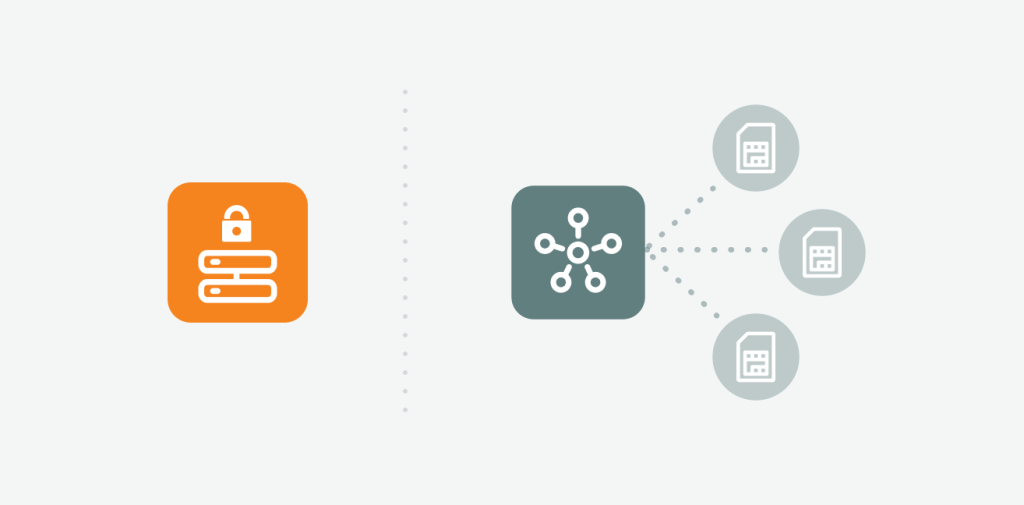
This isn’t about opening up your mobile core. It also isn’t about rebuilding your retail BSS for outside eyes.
The enablement layer sits alongside your existing core network and retail BSS, keeping hosted MVNO operations separated from your core retail environment.
What PortaOne Provides, and What It Doesn’t
Building an MVNO enablement business takes more than a BSS. PortaOne provides the BSS and online charging layer underneath it. That’s the piece that lets you separate products, subscribers, billing, and reporting per MVNO.

The rest of the operating model sits elsewhere: wholesale agreements, KYC, numbering and interconnect, distribution, payments, regulatory reporting, and programme management aren’t something PortaOne takes on. PortaOne also doesn’t act as systems integrator for the whole project, or take on commercial risk through a revenue-share arrangement.
That distinction matters. Building your own enablement layer isn’t buying an “MVNE product” off the shelf. Rather, it’s assembling an operating model where different systems and partners each handle their own part. The BSS and charging layer is the technology foundation underneath it.
Where This Can Take You
A light MVNO you host today can grow. If one of the MVNOs you host eventually outgrows their shared environment, you can move them to a dedicated environment on that same platform.
Want to see what this looks like for a real operator? Read how a PortaOne-powered MVNE scaled mobile services across Africa using exactly this approach. If you want all the deployment-mode details (light MVNO vs. full MVNO, and what’s hosted where) our FAQs cover all of that. For the wider toolkit of checklists, case studies, and launch strategy, the PortaOne MVNO Resource Hub is your place to start.
And if you’re earlier in the thinking process? You might want to read about whether an MVNO business model makes sense for you.
Or just get in touch. We’re always happy to walk you through what MVNO hosting on PortaBilling would look like for your specific network.